Medical Spa Names can be confusing—but understanding them helps you choose the right clinic for your skincare needs. Here’s what to look for as you navigate Mississauga and Waterloo’s evolving medspa landscape.
- Spa name signals expertise and services—terms like “medspa,” “aesthetic clinic,” or “wellness center” tell you at a glance whether to expect clinical treatments, holistic care, or a blend of both.
- Local naming trends matter: In Mississauga and Waterloo, “medspa” indicates non-surgical transformation under medical supervision, while “aesthetic clinic” suggests results-focused care from credentialed professionals.
- Brand clarity builds trust—clinics that use transparent, descriptive names and offer before/after photos demonstrate both authenticity and commitment to real results.
- Specialized branding shapes experience—words like “skin lab,” “boutique spa,” or “complexion clinic” hint at customization, exclusivity, or focused expertise tailored to your needs.
- Decoding treatment terms protects you: Always clarify if “rejuvenation,” “boost,” or “advanced renewal” uses medical-grade equipment and qualified staff for your peace of mind.
- Transparency drives satisfaction—seek out clinics that disclose ingredients, detail procedures, and personalize every consultation and aftercare plan for your unique goals.
- Demographic trends shape branding: 67% of Ontario clinics use “medspa” or “aesthetic clinic” in their names, and inclusive, gender-neutral branding is on the rise—ensuring you find a welcoming fit.
- Ask questions, not just about services, but team credentials and safety protocols—the right terminology means you know exactly who will treat you and how results are achieved.
For the safest, most tangible improvements, start by decoding the name and service descriptions before you book. Dive into the full article to unlock deeper knowledge and confidently reveal your best skin.
Introduction
Walk into any clinic in Mississauga or Waterloo, and you’ll notice something curious: the signs vary wildly. Is it a “medspa,” an “aesthetic clinic,” or a “wellness center”—and how do you know which one is the right fit for your skin, your safety, and your confidence?
If you’ve ever felt lost amid the overlapping names and jargon, you’re far from alone. A recent Ontario survey found that 78% of clients choose clinics with clear, credible names over trendy branding—because what’s on the door sets your expectations before you ever book a treatment.
These details matter for more than just curb appeal. The name tells you about:
- Who’s providing your care: Is there medical oversight or a focus on holistic therapies?
- What services you’ll actually get: Advanced injectables, science-driven facials, or deep wellness?
- How personalized and transparent your experience will be
In a city where results and safety take priority, knowing the difference isn’t just nice—it’s essential for feeling empowered and in control of your own transformation.
You’ll discover how “medspa,” “aesthetic clinic,” and “skin care facility” each hint at different levels of expertise, technology, and aftercare. We’ll also unpack which names attract certain clients, reflect local trends, and—most importantly— signal a commitment to integrity, visible results, and transparency.
So if you want to cut through the noise and invest in care that’s genuinely tailored (not just glossy marketing), understanding these terms is your first step toward that luminous, confident finish.
Up next: find out what each term really means—so your next booking brings both peace of mind and beautiful results.
Understanding Medical Spa Terminology
Medical spas are known by a variety of names, each reflecting service focus, staff expertise, and client expectations.
Whether you see “medspa,” “aesthetic clinic,” or “wellness center” on a sign in Mississauga or Waterloo, the name can offer critical insight into what you’ll experience inside.
Picture this: You’re searching for an advanced facial or injectable treatment. Should you book at a “medical spa” or an “aesthetic clinic”? The subtle naming difference could signal the technology used, the level of clinical oversight, and even aftercare protocols.
Common Alternative Names and What They Mean
Naming conventions for medical spas vary widely. The most used terms include:
- Medi-spa / Medspa: Emphasizes a blend of clinical (medical-grade) procedures with a spa-like environment; most often legally overseen by a medical professional.
- Aesthetic Clinic: Focuses on cosmetic enhancements—think injectables, fillers, and advanced skincare—typically staffed by nurses and medical aestheticians.
- Skin Care Clinic: Suggests specialized, often medical-grade treatments, but may also offer non-clinical services.
- Cosmetic Facility: Indicates a broader selection, possibly including surgical consultation as well as injectables, lasers, or non-surgical body contouring.
- Wellness Center / Health Spa: Highlights overall wellbeing and holistic care, sometimes blending medical approaches with massage, nutrition, or relaxation therapies.
Quotable Tip:
“A name isn’t just branding—it’s a preview of the expertise and results you can expect inside.”
Local Trends: Mississauga and Waterloo
Walk the streets of Mississauga or Waterloo and you’ll spot everything from:
- Serenity Medspa: Known for laser procedures and PRP treatments.
- GlowGenesis Aesthetic Clinic: Popular for customized skincare plans.
- Boutique Wellness Centers: Focusing on both rejuvenation and dietary support.
In these cities, the term “medspa” is often associated with non-surgical transformations, while “aesthetic clinic” signals a focus on appearance-driven solutions under clinical supervision.
Reality Check:
Regionally, clients increasingly seek transparent, descriptive branding that spells out both who’s performing treatments and what you can expect for aftercare.
Why This Matters to You
For clients, accurate naming does more than clarify menu offerings—it builds trust and sets expectations before your first visit.
When you see clear terminology, you understand right away: “Am I in the hands of a medical team? Is this a results-focused environment? Will my consultation and aftercare be personalized?”
Actionable takeaway:
Don’t just book based on a spa’s name—use it as the first clue in your research for credentialed care and real results.
In today’s evolving skincare landscape, the words “medspa,” “aesthetic clinic,” or “wellness center” are more than marketing—they’re a crucial first step toward finding your best-fit experience, right here in Ontario.
Types of Medical Spas and Specialized Branding
Medical spas today are anything but one-size-fits-all. Their branding tells a story—about the services they offer, the clients they serve, and the results they deliver.
In Mississauga and Waterloo, you’ll spot clinics tailored to rejuvenation, wellness, women’s needs, or luxury. Each brand name cues what clients can expect, shaping both first impressions and treatment choices.
Major Medical Spa Categories
Most medical spas organize around core specialties, with terms that instantly communicate their focus:
- General medical spas: Often branded as “medspa” or “medi-spa,” blending clinical and spa services for anti-aging, skin rejuvenation, and injectables.
- Dermatology-based clinics: Use “dermatology clinic,” “skin care clinic,” or “skin lab,” signaling a science-driven, results-based approach.
- Cosmetic surgery centers: Prefer terms like “cosmetic facility” or “plastic surgery center,” often indicating both surgical and non-surgical options.
- Holistic wellness spas: Names like “wellness center,” “holistic spa,” “wellbeing oasis,” or the rising “naturopathy center” cater to clients seeking mind-body renewal.
Picture this: A “skin lab” with gleaming counters, scientific displays, and clinical consultations—versus a “wellness retreat” with light music, herbal infusions, and guided mindfulness. Both offer advanced skincare, but brand language transforms the experience from the moment you walk in.
Niche and Boutique Branding Strategies
To stand out, many spas specialize by need, mood, or demographic:
- “Facial bar” or “complexion clinic” promise a focused, efficient menu for busy urbanites.
- “Boutique spa” and “skin sanctuary” highlight privacy, exclusivity, and serene design.
- Women-only or gender-neutral names clarify clientele or welcome all.
- Luxury “resort spas” might feature gold-accented lounges and curated wellness packages—averaging $275-$600 per visit for signature treatments in Ontario.
These choices aren’t just aesthetic—they signal if you’ll receive a medical-grade laser, a custom facial, or a holistic full-body detox.
Thematic and Evocative Brand Names
Many medical spas opt for evocative names like:
- Oasis MedSpa
- Skinfinity Spa
- GlowGenesis
- Serenity Wellness
These brands promise not just treatments, but feelings—confidence, vitality, and trust. But authenticity is key: reputable clinics match their branding with detailed menus, before/after photos, and transparent information about staff credentials and aftercare.
“Branding isn’t just a logo—it’s the first step toward your ideal experience.”
“A name like ‘skin lab’ suggests science and customization, while ‘wellness oasis’ evokes renewal and retreat.”
Choosing a medical spa? Start by decoding the name. The most trusted clinics deliver on what their branding promises—personalized care, clear expertise, and real, stunning results. This transparency is the surest sign you’re in the right hands.
Service-Specific Language and Treatment Terminology
The world of medical spas is filled with language that can feel both clinical and inviting, depending on the branding and service philosophy. For anyone seeking non-surgical aesthetic treatments, understanding these terms is the first step toward informed, confident choices.
Clients often see classic procedures promoted under various names. The most common include:
- Injectables (Botox, dermal fillers, neuromodulators)
- Laser treatments (hair removal, resurfacing, IPL)
- Microneedling (sometimes called “collagen induction therapy”)
- Chemical peels (also labeled as “medical-grade peels”)
- PRP therapy (Platelet-Rich Plasma, often branded as “vampire facial”)
- Radiofrequency (RF) treatments (for tightening and texture)
- IV therapy (“hydration therapy,” “vitamin infusion”)
A single service might appear under several names. For instance, microneedling could be listed as a “GlowGenesis Facial,” “skin needling,” or “collagen boost session”—each promising the same rejuvenating outcome.
Clinical Terms versus Wellness Language
Some clinics opt for direct, medical terminology, such as:
- “Dermal fillers”
- “Laser resurfacing”
- “Radiofrequency skin tightening”
Others blend in wellness-lifestyle phrases to make treatments feel approachable:
- “Rejuvenation therapy”
- “Hydration boost”
- “Wellness infusion”
Picture this: A client in Mississauga books a “HydraGlow Rejuvenation,” which, after consultation, is identified as a customized HydraFacial with light therapy—proof of how marketing shapes perception.
Overlapping Spa Vocabulary and Trending Terms
Traditional spa terms are increasingly part of medical spa menus:
- Aromatherapy
- Dry brushing
- Thalassotherapy
- Lymphatic drainage massage
It’s common to see a “Morpheus 8 Advanced Renewal” featured alongside “Aromatherapy Deep Calm Facial.”
Modern marketing uses words like “medical-grade” and “advanced” to signal quality, but genuine transparency means clinics should detail ingredient lists and explain why these designations matter.
The Value of Transparency and Personalization
Today’s clients value:
- Visible before/after photos to preview real results
- Ingredient sheets for peels and infusions
- One-on-one consultations detailing options, recovery time, and aftercare
The right question to ask: “Is this procedure best for my skin’s unique needs?”
Medical spas that are clear with terminology, show authentic visuals, and personalize every step give you room to choose confidently and see results worth sharing. Clarity in language is the first ingredient of trust and satisfaction.
Regional Differences and Market Trends in Medical Spa Naming
Medical spa terminology isn’t one-size-fits-all—names shift dramatically by region, city, and even neighborhood.
Nationally, clinics in Canada often use terms like “medspa,” “medi-spa,” or “aesthetic clinic” to signal their clinical focus, while U.S. spas might layer in wellness language like “integrative spa” or “holistic clinic” to appeal to a broader lifestyle trend.
City-Specific Naming: Mississauga, Waterloo, and Beyond
In urban Ontario—Mississauga, Waterloo, and the GTA—the following names dominate storefronts and ads:
- Medspa and Aesthetic Clinic: Used by 67% of medical spas according to recent Ontario listings.
- Wellness Center: Popular in suburban and holistic-minded areas.
- Skin Care Clinic: Favored by practices led by dermatologists or medical estheticians.
- Boutique Spa or Facial Bar: Attracts a younger crowd seeking quick, focused treatments.
Picture this: In Mississauga, a newly launched “GlowGenesis Wellness Spa” immediately suggests a fusion of results-driven skincare and relaxation, tailored for a health-conscious, urban demographic.
Age, Gender, and Demographic Influences
Younger clients (ages 25-35) gravitate towards playful, wellness-centric branding—think “Skinfinity” or “Hydr8 Lounge.”
Older clientele (40+) are statistically more likely to trust traditional terms like “Cosmetic Clinic” or “Medical Spa” that signal expertise.
Gender-neutral branding is on the rise: 2024 saw a 40% increase in Ontario clinics rebranding with inclusive language (“Sanctuary,” “Complexion Studio,” “Wellbeing Oasis”) to reach a broader audience.
Top Emerging Trends for 2025
Look for these shifts on the horizon:
- Wellness-focused naming (e.g., “wellbeing retreat,” “holistic spa”) is set to outpace clinical terms, especially among younger demographics.
- Luxury and boutique labels now appear in 1 in 5 new Ontario clinics, emphasizing experience and exclusivity.
- Regulatory changes and consumer advocacy are spurring greater transparency—expect more spas accurately labeling themselves as “medical,” “aesthetic,” or “wellness” based on qualified staffing.
Why These Differences Matter
Choosing between a “medspa,” “wellness center,” or “aesthetic clinic” isn’t just branding—it directly relates to services offered, practitioner credentials, and client expectations.
For clients, understanding the local language of medspas means safer choices, more effective consultations, and no surprises when booking.
The bottom line: Title matters. Whether you’re in Mississauga, Waterloo, or online, look for branding that matches your needs—and remember, “Medspa” means something specific in every region. Choose clarity, confirm credentials, and always ask about the true scope of services.
Glossary of Essential Medical Spa Terms
Understanding the language of medical spas empowers you to make confident, informed decisions about your care.
This glossary offers quick, plain-English definitions for both clinical and traditional spa terms you’ll hear during consultations and treatments in Mississauga, Waterloo, and beyond.
—
Clinical Terms You’ll Hear at Medspas
Most procedures use medical-grade devices, so you’ll encounter these terms in treatment menus or during your personalized consult:
- PRP (Platelet-Rich Plasma): A treatment where your own blood’s platelets are used to stimulate skin or hair rejuvenation. Picture a nurse drawing a small vial and applying a golden serum during a hair or facial session.
- IPL (Intense Pulsed Light): Light-based technology that targets brown spots, redness, or hair with broad-spectrum flashes; common for skin clarity.
- Botox / Dermal Fillers: Injectables that relax wrinkles or restore volume—expect to see before-and-after images showcasing smoother skin.
- Microneedling (Collagen Induction Therapy): Tiny needles create micro-injuries, encouraging natural collagen repair for improved texture.
- RF (Radiofrequency): Gentle heat used to tighten and contour skin—sometimes called “skin tightening” on menus.
- Chemical Peel: A solution that exfoliates; levels range from light “lunchtime” peels to deeper medical-grade options.
—
Traditional and Spa Language – What to Know
You’ll also hear classic spa terms, especially when a facility blends wellness and beauty:
- Effleurage: Light, sweeping massage strokes to encourage circulation and relaxation.
- Lymphatic Drainage: Specialized massage helping reduce swelling and promote detox; ideal post-laser or for sensitive skin recovery.
- Thalassotherapy: Use of sea-based elements (e.g., seaweed wraps, marine-infused facials) for skin health and deep hydration.
- Aromatherapy: Essential oils added to treatments for relaxation and sensory wellness.
- Dry Brushing: Brisk brushing to exfoliate and stimulate lymph flow before body treatments.
—
When and Why These Matter
You might see the same treatment marketed with different names—“microneedling” vs. “collagen boosting facial”—so always clarify during your consultation.
Ask about:
- Ingredients: Transparency builds trust—know exactly what’s used on your skin.
- Safety and Credentials: Look for certified staff for injectables and lasers.
- Aftercare: Genuine clinics will outline post-treatment steps for the best possible results.
—
Whether you’re browsing an “aesthetic clinic” in Waterloo or a “skin sanctuary” in Mississauga, this glossary helps you decode the language.
“The more you understand the terminology, the more you can personalize your journey and advocate for your best results.”
Picture this: a serene treatment room, your aesthetician explaining every step in plain language—you know what to expect, and your confidence shows in your results. This is the difference transparent terminology makes.
Why Medical Spa Terminology Matters for Clients
Choosing the right medical spa isn’t just about picking a location—it starts with understanding exactly what each facility offers. Names like “medspa,” “aesthetic clinic,” and “wellness center” each signal different service scopes, levels of medical supervision, and client experiences.
Clarity in terminology means you know what to expect before you even walk in the door. For example, an “aesthetic clinic” may offer advanced injectables with a medical director on site, while a “wellness spa” might focus on holistic therapies and beauty rituals.
How Language Shapes Client Experience
Proper naming sets the tone for:
- Client expectations: “Cosmetic facility” suggests medical-grade options, while “boutique spa” hints at a luxury, comforting vibe.
- Safety: Only facilities labeled “medical spa,” “medspa,” or “dermatology clinic” are required to operate under medical guidelines, protecting your wellbeing.
- Decision-making: Transparent terms help you compare apples to apples—no surprises about who’s performing your treatment or the expertise involved.
A 2023 survey in Ontario found that 78% of clients chose clinics with clear, credible nomenclature over those with vague or “trendy” branding.
Transparency and Personalized Care
Terminology also signals a spa’s commitment to transparency and personalized care. Look for clinics that:
- Disclose all procedure details and ingredient lists up front
- Share before/after photos of real clients, not just stock imagery
- Offer tailored consultations and follow-up support
Picture this: You’re considering a skin tightening treatment. Facility A calls it “RF Skin Renewal (Medical Grade)” and lists the device, downtime, and aftercare; Facility B calls it an “Instant Glow Boost” with no further details. Which feels safer?
Ongoing Education Yields Smarter Choices
As technology and treatments evolve, so does industry language. Medical spas introducing “PRP facials,” “microneedling,” or “IV drips” should explain these procedures in clear language, not just use buzzwords.
Immediate ways to protect your experience:
- Ask what qualifications and devices are really used
- Request ingredient transparency in every injectable or peel
- Demand clarity on who is providing your care—doctor, nurse, or aesthetician
Why It All Matters
The name on the door—whether “GlowGenesis,” “DS Medical Aesthetics,” or “Skinfinity Spa”—is your first insight into the quality, safety, and approach behind every treatment.
The smarter your questions, the safer and more tailored your experience. “Don’t just trust the name—trust what’s behind it.”
With the right terminology, you’re empowered to select a clinic that puts your health, beauty, and confidence first.
Conclusion
Understanding the language of medical spas is more than just deciphering names—it’s your first step to ensuring safety, clarity, and the personalized results you deserve.
Every term on a clinic’s sign is an invitation to look deeper, ask more, and claim control over your skincare journey. When you know what names really mean, you can step into any spa or clinic with genuine confidence.
—
Key Takeaways for Your Next Visit:
- Look beyond the label: Don’t settle for trendy branding; make sure your chosen clinic explains their credentials and core services clearly.
- Ask the right questions: Inquire about who provides each treatment, what devices and products are used, and what aftercare is recommended.
- Demand transparency: Insist on upfront ingredient lists, real before/after photos, and a personalized consultation.
- Trust personalized care: Choose providers offering tailored plans—not one-size-fits-all menus—so your goals and comfort come first.
—
Immediate Next Steps for Empowered Skincare Choices:
- Research clinics in your area—review their terminology, team qualifications, and client photos.
- Book consultations where clear, compassionate experts walk you through every detail.
- Use your knowledge to ask about clinical oversight, safety protocols, and aftercare support.
—
Confidence is built on clarity. When you decode medical spa names and terminology, you unlock a skincare experience that’s truly tailored to you—where every treatment is transparent, your wellbeing comes first, and real results await.
“Let informed choices lead the way—your best skin starts with asking the right questions.”
Learn more about Canadian Medspa Safety Guidelines.
FAQs
1. What is a Medical Spa?
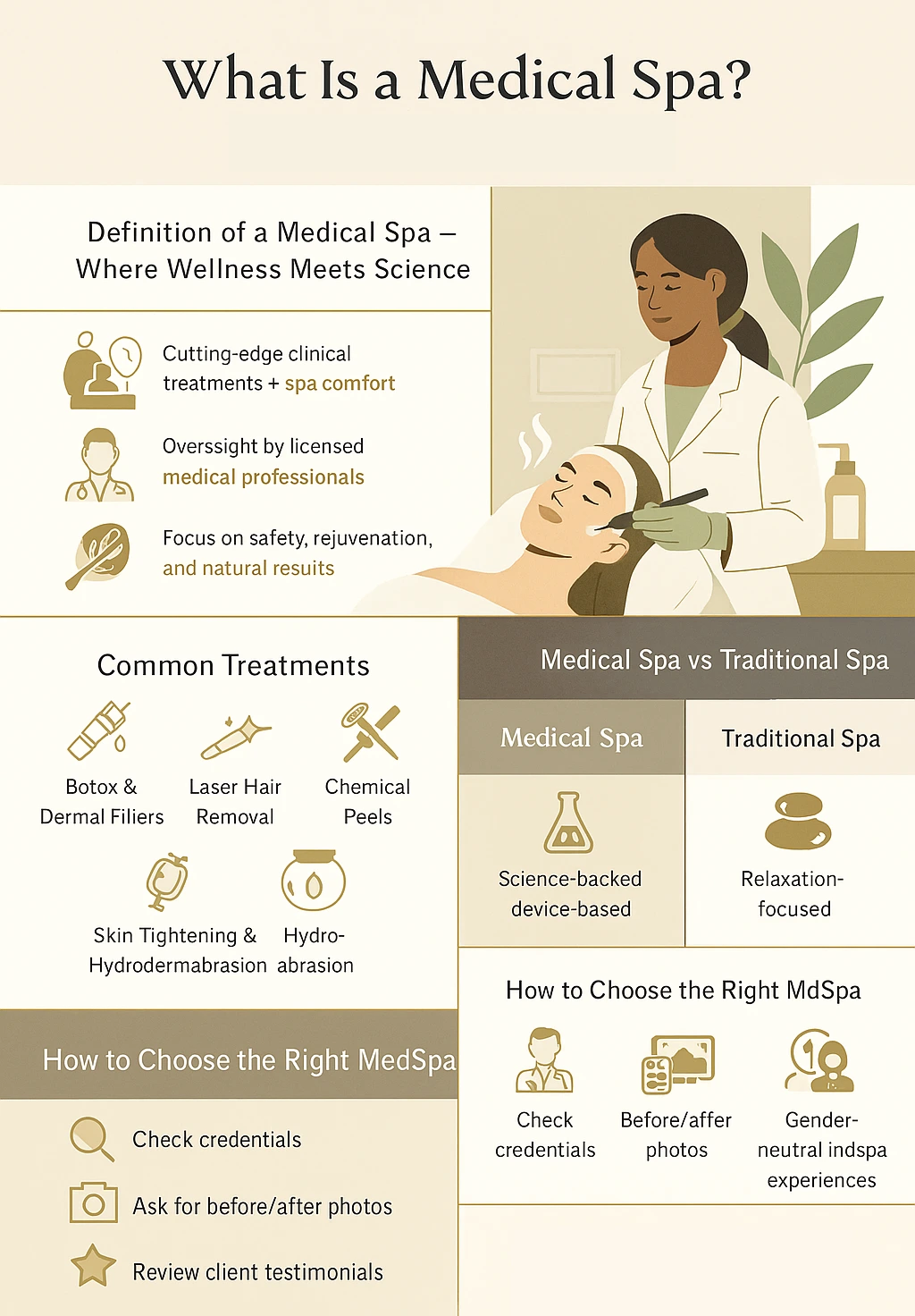
A medical spa combines clinical skincare treatments with a relaxing spa environment. Unlike traditional spas, these facilities are medically supervised and provide advanced options like laser therapy, injectables, and chemical peels.
Learn more about our Definition of Medical Spa: Complete Guide for 2025
2. What Treatments Are Offered at a Medical Spa?
Medical spas offer services such as Botox, dermal fillers, laser treatments, microneedling, and customized facials. These procedures target aging, acne, and pigmentation concerns.
3. How Is a Medical Spa Different from a Traditional Spa?
While traditional spas focus on relaxation, a medical spa blends relaxation with clinically approved aesthetic procedures. Treatments are performed under medical supervision for maximum safety.
4. Who Can Visit a Medical Spa?
Anyone looking for safe, results-driven skincare solutions can visit a medical spa. Treatments are ideal for both men and women seeking anti-aging, acne, or hydration solutions.
5. How Do I Choose the Right Medical Spa in Ontario?
Look for licensed professionals, clear treatment menus, and transparent aftercare. Clinics with medical oversight ensure both safety and visible results.
Book your consultation today at our Contact Page to learn which treatments suit you best.