


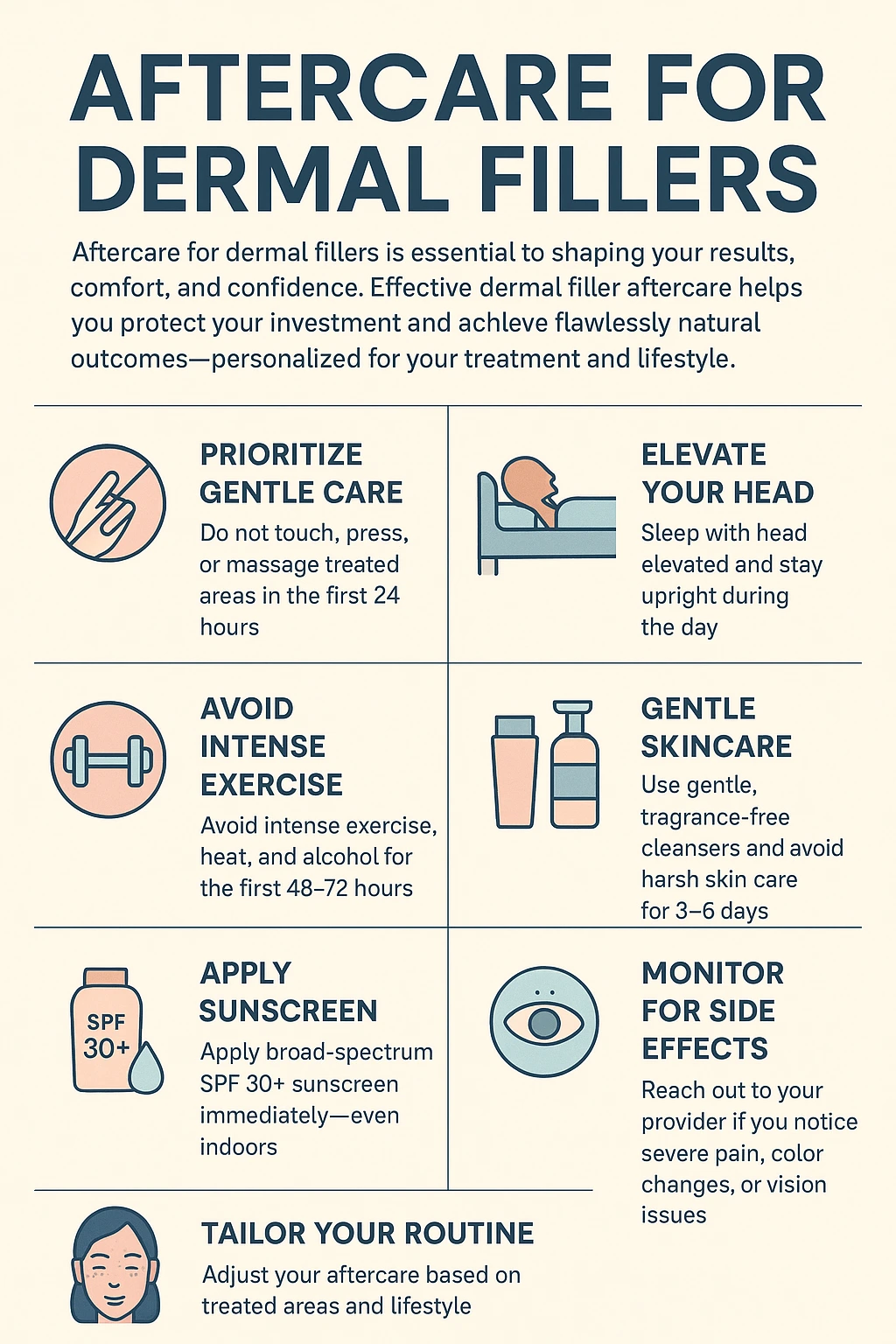
Aftercare for Dermal Fillers is essential to shaping your results, comfort, and confidence. Effective dermal filler aftercare helps you protect your investment and achieve flawlessly natural outcomes—personalized for your treatment and lifestyle.
- Prioritize gentle care in the first 24 hours by avoiding touching, pressing, or massaging treated areas to ensure optimal filler placement and reduced infection risk.
- Elevate your head while sleeping and stay upright during the day for at least 1–2 nights—this minimizes facial swelling and supports smooth, even results.
- Avoid intense exercise, heat exposure, and alcohol for the first 48–72 hours to prevent increased swelling, bruising, or uneven settling of your fillers.
- Choose gentle, fragrance-free cleansers and skip harsh skincare (retinoids, exfoliants) for 3–5 days; this prevents irritation and supports healthy healing.
- Apply broad-spectrum SPF 30+ sunscreen immediately—even indoors—to protect your investment and prevent UV-related pigment changes or filler breakdown.
- Monitor for normal side effects like mild swelling, redness, and bruising, but reach out to your provider immediately if you notice severe pain, color changes, or vision issues.
- Tailor your aftercare to the treated area and your lifestyle—lips, cheeks, and under-eyes each need unique strategies for swelling and healing.
- Hydrate well—drink 8–10 glasses of water daily and choose nourishing, whole foods to dramatically speed recovery and support radiant, long-lasting results.
Follow these tips for a confident, empowered aftercare journey—then dive into the full article for detailed, expert guidance tailored to every step of your treatment.
Introduction
Imagine this: You step out of your filler appointment, thrilled with your refreshed look—only to wonder, “How do I keep these results flawless?”
You’re not alone. Over 80% of clients don’t realize that what you do in the next 24 hours after fillers can shape how natural, smooth, and long-lasting your results turn out.
Dermal filler aftercare is more than just a set of instructions; it’s a gentle partnership between you and your skin—the secret ingredient for that radiant, confident reveal.
Forget generic advice. What your skin needs after treatment depends entirely on:
- Your specific treatment area (lips versus cheeks versus jaw)
- Your skin’s unique sensitivity and health history
- Your daily routines, social calendar, and wellness goals
You’ll discover exactly how to:
- Minimize swelling and bruising, so your comfort and confidence bounce back fast
- Avoid common pitfalls, like hidden activities and habits that delay healing
- Support smoother, natural integration, making every result last longer and look like you—only better
With transparent, easy-to-follow guidance, we’ll walk you through:
- First-day essentials (and must-avoid behaviors)
- Gentle skincare swaps and hydration strategies for optimal glow
- Step-by-step signs of healthy healing versus when to check in with your clinic
- Personalization tips, so every plan fits your face, lifestyle, and schedule
The choices you make right now are a true investment—not just in your skin, but in how you’ll feel every time you look in the mirror.
So, what really happens under the surface—and what should you expect in the days that follow?
Let’s explore the purpose and principles of dermal filler aftercare, starting with why these first hours matter more than you might think.
Principles Understanding Aftercare for Dermal Fillers: Purpose and Principles
The first hours and days after your dermal filler appointment are crucial for achieving the most natural, long-lasting results.
Your aftercare routine isn’t just a checklist—it’s the key to helping the filler settle smoothly, with minimal downtime or side effects.
What Aftercare Aims to Achieve
Dermal filler aftercare revolves around three main goals:
- Optimizing results so your enhancement looks its best
- Minimizing downtime by reducing swelling and bruising
- Lowering risk of complications, like infection or improper filler placement
Careful aftercare can help turn a good result into a great one.
Why Smart Aftercare Matters
Picture this: you walk out of the clinic, skin feeling refreshed and confidence lifted.
The way you care for your skin in the next 24 hours determines how beautifully your results settle.
- Gentle management—like not touching or pressing on treated areas—ensures the filler stays exactly where your expert placed it
- Staying upright and following recommended routines can help swelling resolve up to 25% faster
Quotable tip: “How you treat your skin after fillers truly shapes your final result.”
Personalized Approach: No One-Size-Fits-All
Your aftercare isn’t generic. The perfect routine is:
- Tailored to your treatment area: Lips heal differently than cheeks or under-eyes
- Adapted to your skin type and health history: Sensitive, allergy-prone, or robust skin all need different nuances
- Adjusted for your lifestyle and schedule: Events, travel, or work can influence downtime
Always ask for bespoke advice at your consultation—it’s one foundation of our client care.
What’s Normal (and When to Seek Help)
Expect some mild swelling, tenderness, and bruising during the first few days—these are typical, and most fade within 48–72 hours.
Watch for these as normal:
- Puffy or slightly firm skin
- Redness at injection points
- Small, tender bruises
Contact your provider if you notice:
- Severe or increasing pain
- Greyish or mottled skin
- Sudden vision changes
Quotable moment: “When in doubt, reach out—your peace of mind is worth it.”
Aftercare’s Place in Your Filler Journey
Think of aftercare as the bridge between your first consultation and your follow-up visit.
- Photographing your progress helps you and your provider assess results and plan tweaks if needed
- Transparency and education empower you to make smart, confident choices at every step
In summary, thoughtful aftercare isn’t just about instructions—it’s a personalized pathway to radiant, safe, and lasting results. The time you take now is an investment in your future glow.
Immediate Post-Treatment Care (First 24 Hours)
Essential Do’s and Don’ts
The hours after your dermal filler appointment are all about protecting your results. What you do (or don’t do) in the first 24 hours can make all the difference in smooth, natural-looking outcomes.
To protect your investment and healing skin:
- Don’t touch, press, or massage the treated area for at least 6 hours—ideally the rest of the day—to avoid infection or moving the filler.
- Do stay upright as much as you can, and keep your head elevated, including while you sleep; skip bending over or lying flat, especially for lips or under-eye filler.
- Use cold packs carefully: apply a clean, wrapped cold compress for 10–15 minutes an hour (while awake), but never press ice directly to your skin or overcool the area.
- Skip makeup and heavy skincare on treated areas until at least the next day, reducing chances of irritation and bacteria.
Real talk: following these steps sets the stage for minimized swelling, faster healing, and longer-lasting confidence.
Managing Common Symptoms
Expect some changes—like redness, swelling, mild tenderness, or a feeling of tightness—up to 48 hours after your visit. These are typical responses as your skin settles.
For symptom relief, try these trusted approaches:
- Safe over-the-counter options (like acetaminophen) can help ease discomfort—your provider will advise the best choice.
- Avoid strenuous activity that could worsen swelling or bruising until cleared by your injector.
A pro tip: snap “before” and “immediate after” photos in natural light so you can track your progress and notice improvements each day. This is a favorite tip for documenting your self-care journey!
Why These First Hours Matter
Smart aftercare isn’t just a clinic checklist—it’s your chance to take control. Think of it as the foundation for filler success:
- Filler settles and integrates best when left undisturbed, especially in the delicate first 24 hours.
- Giving your skin time to recover means reduced bruising and smoother contours.
Remember, “The results you reveal tomorrow start with the care you give today.” For optimal, lasting results, let healing take center stage in these first crucial hours.
What to Avoid: Activities and Habits (First 1–3 Days)
Exercise, Heat, and Lifestyle Factors
The first 72 hours after your dermal filler session are critical—what you avoid can be just as important as what you do.
Steer clear of any intense physical activity that raises your heart rate, as this can worsen swelling and bruising:
- Strenuous workouts
- Heavy lifting
- Running or vigorous yoga
For best results, take a “rest day” approach for 24–48 hours—even a spin class or HIIT session can encourage the filler to shift before it sets.
Heat puts more at risk than just your comfort; it can increase inflammation and compromise results. Skip anything that raises your body temperature:
- Hot showers longer than a few minutes
- Saunas
- Steam rooms
- Tanning beds
- Direct, intense sun exposure
Picture this: you’ve just had your cheeks refreshed and decide to unwind with a hot tub or beach day—expect double the swelling, or even risk uneven settling.
“Skipping your sweat session now means less downtime and smoother, longer-lasting results.”
Medications, Supplements, and Other Substances
Bruising is usually mild, but common substances can secretly make it worse.
Avoid during the first 1–3 days (unless medically necessary and cleared by your provider):
- Alcohol (including wine, beer, and spirits)
- Aspirin or NSAIDs (like Advil, Motrin, ibuprofen)
- Blood-thinning supplements (e.g., vitamin E, fish oil, ginkgo)
- Herbal blends with garlic, ginger, or turmeric
Always bring a list of everything you take to your appointment—even that daily multivitamin.
Clear, transparent communication is the gold standard for safe recovery: let your provider know about all medications and supplements before and after your procedure.
“One glass of wine might double your chances of a bruise the next morning—hold off until you’re healed.”
Social plans matter, too. Book filler at least a week before any big event so you look and feel your best, minus makeup camouflage.
Key Takeaways
The best results start with simple choices: rest over hustle, cool over hot, and clear calendars over booked ones.
Every decision in these first days shapes your final outcome—give your skin the calm, protected environment it needs for a flawless reveal.
Gentle Skincare and Healing Support
Cleansing and Topical Care
The hours after your dermal filler treatment set the tone for a smooth recovery and natural result.
Reach for gentle, fragrance-free cleansers—these are your safest bet for avoiding irritation.
Skip formulas with retinoids, acids (like AHAs or BHAs), and exfoliants for at least 3–5 days, as these can inflame sensitive post-treatment skin and impact healing.
After washing, always pat the area dry with a soft cloth instead of rubbing.
Every swipe and dab counts: “Picture this—your skin’s like fresh canvas after a treatment, and a gentle touch keeps it pristine.”
Hydration and Moisture
Keeping your skin comfortably hydrated speeds up visible recovery.
- Apply a simple, nourishing moisturizer (think ceramide-rich or hyaluronic acid-based) to help maintain the delicate barrier.
- Drink extra water—up to 8–10 glasses daily—which helps hyaluronic acid fillers work their magic and minimizes swelling.
- For those “before and after” photos, dewy, hydrated skin always looks more radiant and even-toned.
“Every sip supports your glow: Hydration is the secret ingredient to seeing fast, beautiful filler results.”
Sun Protection Strategies
The right sun protection is non-negotiable for fresh filler care and long-term results.
Start immediately with a broad-spectrum SPF 30+ sunscreen—even if you’re spending the day indoors.
For extra care after under-eye or cheek filler, add:
- Wide-brimmed hats and soft scarves if outdoors, especially while bruising is visible.
- Long sleeves or shade when possible, just until healing is complete.
A daily SPF habit also means your investment lasts longer: Studies show UV damage can degrade filler and worsen skin pigmentation, especially over bruises.
“Sun protection isn’t just for vacation—after fillers, it’s your shield for smooth, even results.”
These gentle steps let your results breathe while supporting rapid recovery, comfort, and a fresh, confident look. Prioritize hydration, minimal touch, and reliable sun care for the most beautiful, lasting outcome.
Sleep, Positioning, and Pressure Management
Optimizing Sleep Environment
Your sleep position can make or break your dermal filler results—especially in the first 48 hours.
The golden rule: sleep on your back with your head elevated for at least 1–2 nights post-treatment.
Try these practical tips to set yourself up for restful, safe sleep:
- Prop up with 2-3 soft pillows, or use a wedge cushion, to reduce facial swelling and prevent fluid accumulation.
- Train yourself to avoid side or stomach sleeping by placing a pillow at your side for gentle support.
- For under-eye, cheek, or lip fillers, extra head elevation minimizes morning puffiness and helps the filler settle beautifully.
“Picture this: you wake up after a restful night, swelling is minimal, and your results look smooth—just by switching up your nighttime routine.”
Avoiding Filler Displacement
Sleeping on your side or stomach can accidentally shift your filler, leading to subtle asymmetry or less natural contours.
Pressure from bedding, your hands, or even tossing and turning is enough to affect how the filler sets.
Easy ways to stay on track:
- Sleep with hands away from your face (consider light gloves if you unconsciously touch your cheeks or lips).
- Use a silk or satin pillowcase—a client favorite for reducing friction while healing.
- If you wake up on your side, gently reposition and remind yourself, “The first few nights matter most!”
“Small changes in your sleep habits can pay off with longer-lasting, more balanced filler results—think of it as beauty sleep, upgraded.”
Creating Consistent Habits
- Set an alarm or use sleep tracking apps to monitor your position.
- Enlist a partner to softly nudge you if you roll over.
- Make your bedroom a relaxation zone, helping reduce the urge to shift positions in your sleep.
Getting used to new habits can feel awkward, but the payoff is profound—less swelling, fewer irregularities, and fillers that look their best.
Summary: Prioritizing back-sleeping with extra head elevation after dermal fillers is a simple yet powerful way to protect your new look. By minimizing pressure and consciously avoiding face touching, you’re investing in smoother, natural, and longer-lasting results—rest easy knowing every gentle night counts.
Monitoring and Recognizing Complications
What’s Normal vs. What’s Not
After dermal fillers, some mild swelling, tenderness, and redness are expected.
Most clients notice:
- Swelling that peaks within 24–48 hours, then subsides in 2–5 days
- Minor bruising that fades gradually over a week
- Subtle lumps or firmness that smooths out as the filler settles
Small, temporary irregularities beneath the skin are common as the product absorbs water and softens.
Keep an eye on your results by snapping a quick “immediate after” photo—this helps you track subtle changes day-to-day.
Red Flags: Visual and Sensory Changes
Be alert to unusual developments, such as:
- Unexplained color shifts: mottled, dusky, or pale patches on or near the treated area
- New or growing lumps, which may feel hard or painful
- Noticeable asymmetry—for example, if one cheek or lip becomes suddenly more swollen or misshapen
Picture this: You wake up, and an area that was simply pink yesterday is now turning bluish or grey—that’s your cue to act fast and contact your provider.
When to Contact Your Provider
Certain symptoms need urgent expert attention:
- Severe or rapidly worsening pain
- Blisters, skin breakdown, or unusual numbness
- Sudden vision disturbances (double vision, blurring, or shadows)
- Dramatic, uneven swelling or a sudden droop in facial features
Document concerns by:
- Taking clear photos (same lighting/angle daily)
- Writing brief symptom notes (time, sensation, changes)
Keep these resources handy for your follow-up—it ensures precise, timely guidance.
Value of Transparent Follow-Up
Proactive follow-up appointments and open communication build genuine trust and transparency between you and your clinic.
When you feel empowered to report concerns, your provider can address them with expertise and compassion.
Shareable note: “When in doubt, speak up—no concern is too small when it’s your face and confidence on the line.”
Staying attentive to your body is the most important aftercare practice: if something doesn’t seem right, trust your instincts and reach out for expert support. This vigilance helps protect your results—and your peace of mind.
Personalized Aftercare: Tailoring Recommendations to Treatment Area and Individual Needs
Per-Area Specifics
Every treatment area responds differently—your lips, cheeks, under-eyes, and jawline all require their own aftercare approach.
Lips tend to swell the most:
- Expect 24–48 hours of puffiness; apply cold compresses in gentle intervals and limit talking, eating spicy food, or sipping from straws for the first day.
- Skip lipstick or balms until any tenderness fades to avoid irritation.
Cheeks and jawline may feel firm or mildly achy:
- Sleep with your head elevated to reduce morning swelling.
- Avoid pressing your face on pillows or hands.
Under-eye area is delicate:
- Use cold packs wrapped in a clean cloth and avoid eye makeup until tenderness subsides.
- Anticipate minor swelling or bruising peaking in 24–48 hours, then fading.
“Picture this: a refreshed, confident you—each area cared for with its own tailored plan for natural-looking results.”
Personal Health and Lifestyle Factors
If you have sensitive skin, allergies, or specific health concerns, customize your aftercare in conversation with your provider.
Adapt your routine based on:
- Childcare, work shifts, or travel—plan appointments with downtime in mind.
- Known triggers (like seasonal allergies or a history of easy bruising) so aftercare products and tips support your needs.
Getting proactive means less stress and smoother healing: “Optimal aftercare fits into your real life—it’s not one-size-fits-all.”
The Role of Follow-Up and Ongoing Support
Follow-up visits aren’t just routine—they’re a chance to perfect your results and catch any concerns early.
Benefits include:
- Subtle adjustments, enhancement, or touch-ups for lasting refinement.
- Professional photo comparisons to track progress.
- Peace of mind knowing you have expert support a call or text away.
Frequent check-ins underscore our core value: “Personalized care is what creates beautiful, confident outcomes.”
Quality aftercare empowers you to feel secure and supported. By following personalized tips for your treatment area and unique lifestyle, you’ll enjoy smooth healing, long-lasting results, and a truly tailored experience from start to finish.
Recommended Products and Supportive Practices
Clinic-Approved Skincare
Choosing the right post-filler skincare is key to gentle healing and comfort. Look for fragrance-free, non-comedogenic cleansers—think creamy or gel formulas that won’t strip delicate, treated skin.
Skip anything with alcohol, retinoids, AHAs, BHAs, or scrubs for at least five days, as these can trigger irritation and disrupt healing.
For optimal hydration, apply a simple, soothing moisturizer morning and evening. Products containing hyaluronic acid, ceramides, or squalane work well for amplifying moisture without feeling heavy or greasy.
Picture this: You wake up, splash your face with lukewarm water, dab on a gentle cream, and feel immediate softness—with no stinging or redness.
Best advice: “When in doubt, less is more—your provider’s recommendations always outweigh trendy skincare routines.”
Supportive Wellness Practices
How you care for your body directly impacts how your filler settles and how quickly you recover. Drink extra water—about 8–10 glasses a day—to maximize hyaluronic acid filler plumping and support cellular renewal.
In the days after treatment, prioritize:
- Whole foods: Lean proteins, leafy greens, berries, citrus, and omega‑3‑rich fish
- Rest: Aim for 7–9 hours of sleep as skin renews overnight
- Stress management: Try short walks, deep breathing, or calming music to lower cortisol and inflammation
Your “glow-up” begins on the inside—think of this as much a reset for your spirit as your skin.
Favorite shareable tip: “Hydrated skin = your best filler results. It’s science, not just self-care!”
Tools and Therapeutics
Cold compresses are your day-one best friend. Use a soft gel pack or clean cloth, applying for 10–15 minutes each hour to minimize swelling and discomfort—never place ice directly on skin.
For those considering lymphatic rollers or gua sha stones, hold off until your clinic gives the green light, typically after swelling subsides.
Be wary of at-home remedies that promise overnight miracles. Always prioritize evidence-based guidance from your provider and skip “DIY hacks” found online.
Visualize this: A serene morning, soft gold sunlight, and a gentle compress helping you recover with elegance.
The right aftercare products and supportive habits can be the difference between ordinary recovery and truly radiant, long-lasting results. For every client, the recipe is confidence, science, and a touch of personal care—trust your clinic, stay hydrated, and let your skin reveal its best self.
Conclusion
Thoughtful aftercare isn’t just about protecting your dermal filler investment—it’s about empowering yourself to reveal a fresh, confident you with results that look as natural as they feel.
By committing to a personalized aftercare routine, you’re embracing the partnership between expert clinical care and your own daily choices. Every gentle step you take today supports smoother healing, lasting enhancement, and peace of mind.
—
Key Actionable Takeaways:
- Prioritize gentle care: Stick to fragrance-free cleansers, pat skin dry, and avoid all pressure or massage on treated areas.
- Hydrate inside and out: Drink extra water and use a simple moisturizer to optimize filler longevity and comfort.
- Protect your results: Apply SPF 30+, skip direct heat and exercise for the first 72 hours, and sleep with your head elevated to minimize swelling.
- Monitor and communicate: Snap daily photos, watch for red flags, and reach out to your provider if anything feels off.
- Personalize your routine: Adjust aftercare based on treatment area, lifestyle, and specific health needs—no one-size-fits-all plans.
—
Next Steps:
- Start your aftercare immediately: Follow clinic instructions the moment you leave, and set reminders for hydration and sun protection.
- Schedule your follow-up: Book your post-treatment check-in to ensure your results are progressing beautifully.
- Reach out early: If you experience unusual symptoms, your peace of mind is worth a prompt call or message to your provider.
—
You have the tools and support to reveal your most radiant, confident self—your future glow starts with the care you choose right now.
“Aftercare is your commitment to yourself—invest in mindful healing today, and let your results speak for themselves tomorrow.”
To understand how results evolve and how long they last, check out our guide on Dermal Fillers Before and After: Results, Longevity & Aftercare
FAQs
Q1. How long does swelling last after dermal fillers?
Mild swelling and tenderness usually last 24–48 hours, while minor bruising can fade within a week. Keeping your head elevated and avoiding heat or strenuous exercise helps minimize these effects.
Q2. What should I avoid after dermal fillers?
Avoid touching, pressing, or massaging the treated area for at least six hours. Skip alcohol, heavy exercise, saunas, and makeup for 48–72 hours to ensure smooth filler integration and reduced bruising.
Q3. Can I wear makeup after dermal filler treatment?
It’s best to wait at least 24 hours before applying makeup to the treated area. This helps prevent irritation or infection while your skin heals.
Q4. What’s the most important step in dermal filler aftercare?
Consistent hydration and sun protection. Drink plenty of water, use a broad-spectrum SPF 30+, and follow your injector’s personalized aftercare advice for long-lasting, natural results.
Q5. Where can I learn more about dermal filler safety and recovery?
For trusted medical information on filler safety and aftercare, visit the American Society for Dermatologic Surgery (ASDS).